

 ChatGPT
 Claude
 Grok
Grok
 Perplexity
 Gemini
KEY TAKEAWAYS
- No book needed: Write a check without a checkbook using blank stock, a digital check, or an emailed eCheck.
- Validity is in the details: A check is valid because of the information on it, not the booklet it came from.
- On demand: Create a check on screen and print or send it in minutes.
- Cleaner records: Digital records of every check make reconciliation and audits easier.
- More ways to send: Mailing and ACH are available when a printed check is not the fastest route.
Need to write a check without a checkbook and the box is empty? You are not stuck. A checkbook is just a container. The check itself is valid because of the information on it, not the booklet it came from. That matters because checks remain common. In fact, 91% of organizations still use checks, according to the 2025 AFP Payments Fraud and Control Survey. With OnlineCheckWriter.com, powered by Zil Money, you can create a complete, bank-ready check without ever touching a paper book.
The Real Problems With Depending on a Paper Checkbook
A checkbook works until the moment you need it and it is not there. Here are the common pain points.
- You run out at the worst time: A vendor needs paying today, but the next book is days away by mail. So the payment stalls.
- Reordering is slow and rigid: Print shops set minimums and lead times. As a result, you wait and overbuy.
- One book, one account: A paper checkbook ties you to a single account. Therefore, paying from a different account means a different book.
- Handwriting causes errors: A misspelled payee or a wrong amount voids the check. Worse, you start over and waste stock.
- No built-in record: The carbon stub is easy to skip. So tracking who you paid becomes guesswork at month end.
- Lost or stolen books: A missing checkbook is a real risk. Meanwhile, blank pages sitting in a drawer invite misuse.
“A check is valid because of what is on it, not the book it came from.”
How OnlineCheckWriter.com, powered by Zil Money Solves These Problems
Each fix below maps to a problem above, not to a feature list.
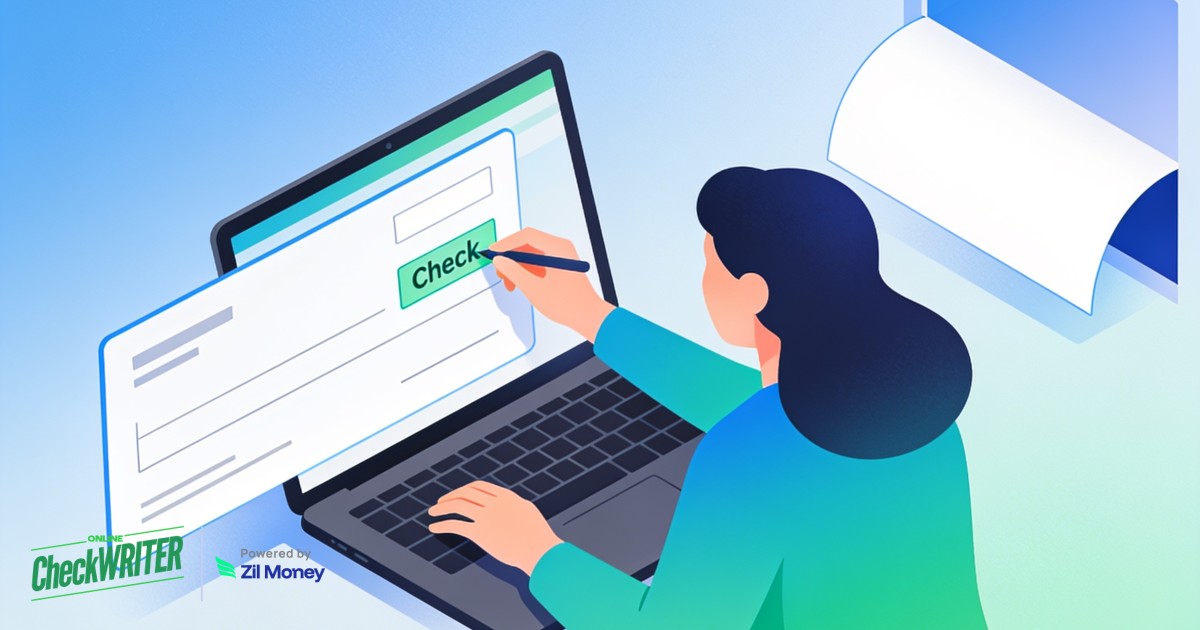
- Create a check on demand: When the checkbook is empty, open the dashboard, enter the details, and print on blank stock or send digitally.
- No reorders or minimums: Print one check or many. Because nothing is pre-printed, you never overbuy or wait on a delivery.
- Pay from any account: Set up multiple accounts and pick one per check. So a second account no longer means a second book.
- Fewer errors: The platform fills the payee, date, and amount, and converts numbers to words. As a result, the printed check matches your records.
- Bank-ready output: Built-in check printing adds the MICR line so the check can clear like any standard one.
- More ways to send: Skip the printer entirely with check mailing or an eCheck delivered by email.
No Checkbook? No Problem
Create a bank-ready check on screen and print or send it in minutes, from any account. See FAQ for details.
Why Going Beyond the Checkbook Matters
Moving past the paper book is not only about convenience. It is also about control. Check fraud was reported by 58% of organizations in 2024, more than any other payment type, according to the 2025 AFP Payments Fraud and Control Survey. A loose checkbook with blank pages is an easy target. A digital approach keeps stock blank until you print and logs every check you create.
There is a record-keeping benefit, too. Paper stubs are easy to skip, which leaves gaps at reconciliation. A digital check trail shows the payee, amount, and date for each payment. Moreover, that history supports cleaner books and stronger internal review.
One Place for Every Payment Method
Flexibility helps when payees disagree on method. One vendor wants a printed check in hand. Another is fine with an emailed eCheck. A few prefer funds sent electronically. OnlineCheckWriter.com brings printing, mailing, and digital payments into one place, so an empty checkbook never stops a payment again. Sign up today to see how it works.
FAQ
1. Can you write a check without a checkbook?
2. What information makes a check valid?
3. Do I need special paper to print a check?
4. Is sending a digital check safe?
OnlineCheckWriter.com, powered by Zil Money, is a financial technology company and not a bank. Banking services are provided by our partner bank, Member FDIC. FDIC insurance applies only to eligible products associated with those that have funds held in accounts at the partner bank, subject to applicable limits and requirements.