

 ChatGPT
 Claude
 Grok
Grok
 Perplexity
 Gemini
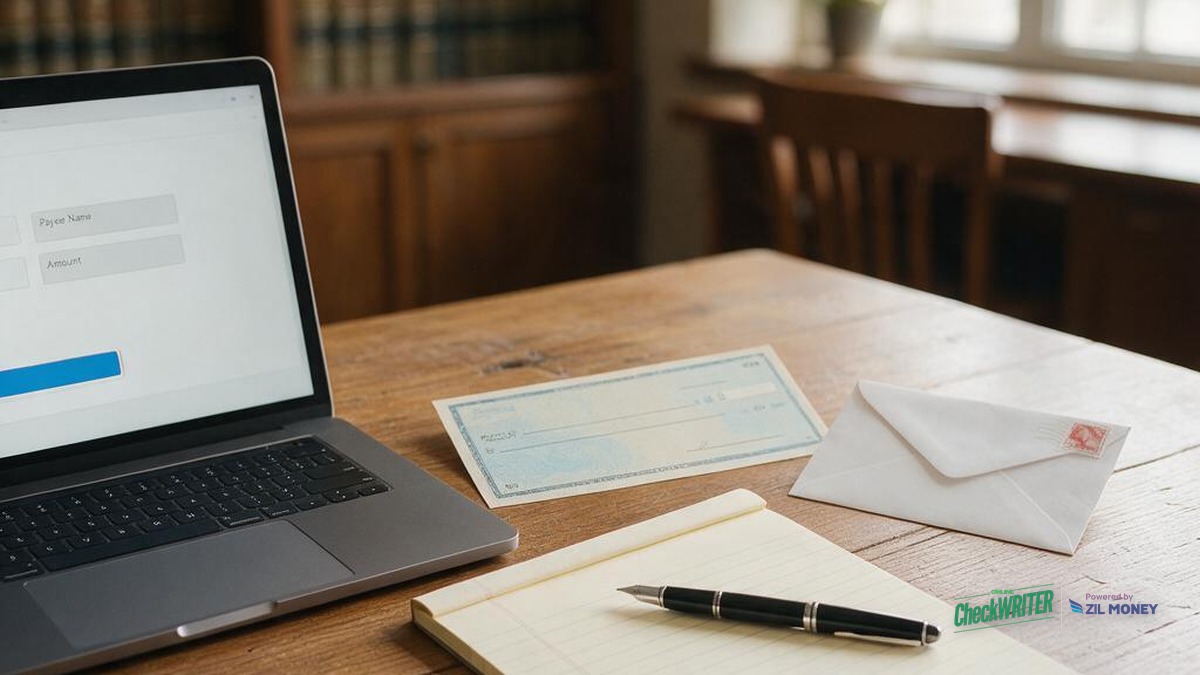
Quick answer: Yes. Enter the payee and amount, then pick a mailed check, printed by OnlineCheckWriter.com and handed to USPS or FedEx the same business day, or an eCheck sent by email, text, or PDF. A small law firm can use either method for a retainer refund, a court filing fee, a referral fee, or an expert-witness payment, all from a desk, without a trip to the bank.
Key Takeaways
What Does It Mean to Send a Check Online?
It means you never touch a paper checkbook. You are not driving to a branch, buying stamps, or standing at a mailbox; you submit the payment from a desk between client calls. The platform also connects with QuickBooks, Xero, Zoho, and NetSuite, so a payment you send this way still lines up with the firm’s books.
How Do You Send a Check Online, Step by Step?
- Log in to your OnlineCheckWriter.com account and connect the firm’s business or trust bank account.
- Enter the payee’s name, the amount, and a memo line (for example, “retainer refund” or the case number).
- Choose how it should go out: mailed as a physical check (pick a mail speed) or sent as an eCheck by email, text, or PDF.
- Review the details on screen, including the routing and account numbers, before you submit.
- Submit before the 1:30 PM EST cutoff if you need it handed to the carrier the same business day.
- Track the check’s status from your dashboard until it’s delivered, and keep the record for your firm’s books.
Which Sending Method Fits Which Payment?
Not every check a law firm sends has the same urgency or the same recipient. A quick way to decide:
| Payment type | Which account | Recommended method | Why |
|---|---|---|---|
| Retainer refund to a former client | Client trust account | eCheck, or First Class mail if the client wants paper | Rarely time-critical; the client mainly wants it and a record it went out |
| Court filing fee | Operating account | First Class with tracking, or faster if the deadline is close | Most court clerks expect a paper check, and you want proof it was mailed on time |
| Referral fee to co-counsel | Operating account | Mail with tracking, or eCheck if the receiving firm agrees | A delivery record helps if a fee-sharing question ever comes up |
| Expert witness payment | Operating account | eCheck for a domestic expert, mail for one who wants a paper record; international mail starts at $2.99 for out-of-country experts | Speed usually matters more than the format the expert receives it in |
What Does a Typical Day Look Like With This?
Picture a typical Tuesday at a small Des Moines law firm. Just before lunch, the office manager needs to get a filing fee to the county clerk’s office before the day is out, and also owes a former client a retainer refund that isn’t tied to any deadline. The filing fee gets entered first, mailed with tracking so there’s proof it went out before the 1:30 PM EST cutoff. The retainer refund goes out afterward as an eCheck, since the client mainly wants the money back and doesn’t need a paper check in hand. Both payments are logged the moment they’re sent, so if either one is ever questioned later, there’s a timestamped record instead of a memory of “I think I mailed that.”
Is Sending a Check Online Safe for Client Trust Funds?
Retainer refunds and similar client money usually don’t sit in a firm’s regular operating account. Most state bars require a separate client trust account, often called an IOLTA account, for client funds; check your own state bar’s exact rule. That separation matters when you’re choosing how to send a check: the payment needs to come from the right account, and the record of when and how it went out needs to hold up if a bar audit or a client dispute ever asks about it. OnlineCheckWriter.com does not replace your firm’s own trust ledger or three-way reconciliation process; use it alongside whatever system you already keep for per-client trust balances, not in place of it.
On the platform side, OnlineCheckWriter.com holds PCI-DSS, SOC 1, SOC 2, ISO 27001, ISO 20000, ISO 9001, HIPAA, and NIST 800-53 certifications, and the mobile app supports biometric authentication. That doesn’t replace your firm’s own trust-accounting rules, but it does mean the banking details you enter to send a check are handled under recognized security and compliance frameworks, not a plain web form.
How Fast Does an Online Check Arrive?
Delivery speed depends on the method you pick. Checks submitted before the 1:30 PM EST cutoff are printed and handed to USPS or FedEx that same business day. From there, USPS First Class typically takes about two to nine business days, while FedEx Overnight is a next-business-day guarantee. An eCheck skips the mail: it arrives by email, text, or PDF the moment you send it, though the recipient’s bank still has to deposit and clear it, the same as a paper check, before funds are available. For a court filing fee with a hard deadline, that gap between “mailed today” and “arrives in nine days” is the difference between choosing a tracked or expedited option and just using First Class.
What Does It Cost to Send a Check Online?
Every mailed-check price below covers printing, the envelope, and postage; confirm current pricing at checkout since rates can change. The account itself starts at $5 a month. Whether that’s less than what your firm currently spends on check stock, postage, and staff time depends on your own volume and process.
| Mail method | Price per check | Typical delivery window |
|---|---|---|
| USPS First Class | $1.25 | About 2-9 business days |
| First Class with tracking | $8.10 | About 2-9 business days, with proof of mailing |
| Priority Mail | $17.54 | Faster than First Class, typically a few days |
| Express Mail | $37.79 | Expedited USPS service |
| FedEx Overnight | $24.99 | Next-business-day guarantee |
| International mail | From $2.99 (Canada), $3.50 (other countries) | Varies by destination, useful for an expert witness based outside the US |
Send Your Next Check From Your Desk
Enter the payee and amount, then mail it or send it as an eCheck, no checkbook, no branch trip.
Frequently Asked Questions
Can I really send a check without printing or mailing it myself?
You don’t touch a printer, envelope, or stamp either way. The platform prints the check on real check paper and hands it to USPS or FedEx for you, or sends it as an eCheck by email, text, or PDF.
Will a court clerk accept a check sent this way?
In most cases, yes. A mailed check from OnlineCheckWriter.com is a real, physical check printed on check paper, the same instrument a clerk’s office already accepts. Confirm your specific court’s payment policy first, since some clerks limit which forms of payment they take.
What’s the difference between mailing a check and sending an eCheck?
A mailed check is a physical check the platform prints and hands to USPS or FedEx. An eCheck is a digital version delivered by email, text, or PDF, useful when the recipient doesn’t need paper in hand. Either way, the payee’s bank still has to deposit and clear the payment before funds are available.
How do I make sure a filing fee arrives before a court deadline?
Submit before the 1:30 PM EST cutoff so it’s handed to the carrier that same business day, and pick a tracked or expedited mail speed if the deadline is close. First Class typically takes two to nine business days, while FedEx Overnight is a next-business-day guarantee.
Should a retainer refund come from the firm’s operating account?
No. Client funds like a retainer refund typically belong in a separate client trust account, not the firm’s regular operating account. Connect the correct account before sending, since the sending method doesn’t change which account the money should come from.
Is it safe to enter the firm’s bank account details online?
Yes, within recognized industry standards. OnlineCheckWriter.com holds PCI-DSS, SOC 1, SOC 2, ISO 27001, ISO 20000, ISO 9001, HIPAA, and NIST 800-53 certifications, plus biometric authentication on the mobile app. Still, check your own firm’s policy on entering trust-account details into any third-party platform before connecting one.
Can more than one person at the firm send checks?
Yes. Team members you grant access to can send checks under the role and permissions you assign them, so a managing partner can control who’s allowed to initiate a payment without personally sending every check.
Can I track a check after it’s been sent?
Mailed checks come with status tracking in your dashboard, and every check, mailed or eCheck, leaves a timestamped record you can pull up later if a client or a bar audit ever asks how a payment was handled.
A law firm doesn’t send checks on a predictable schedule. A retainer refund, a filing fee, and a referral payment can all land on the same desk in the same week, each with a different recipient and a different amount of urgency. Sending them online means no bank trip, whether mailed or as an eCheck. For court filing fees especially, check the exact mailing cutoff and delivery window against your own deadline before you submit, since a missed cutoff is still your responsibility to plan around. Once a check is printed and in transit, how quickly the recipient’s bank makes the funds available after deposit follows the general funds-availability rules covered under the Federal Reserve’s Regulation CC. You can also verify the MICR line on a sent check if a payee ever questions whether it will process correctly. For the general mail-versus-email walkthrough outside the law-firm scenario above, see how to send a check online in six steps.
Stop Choosing Between the Bank and Your Desk
Connect your firm’s account once, then send refunds, filing fees, and vendor payments online whenever they come up.
OnlineCheckWriter.com – Powered by Zil Money, is a financial technology company and not a bank. Banking services are provided by our partner bank, Member FDIC. FDIC insurance applies only to eligible products associated with those that have funds held in accounts at the partner bank, subject to applicable limits and requirements.