

 ChatGPT
 Claude
 Grok
Grok
 Perplexity
 Gemini
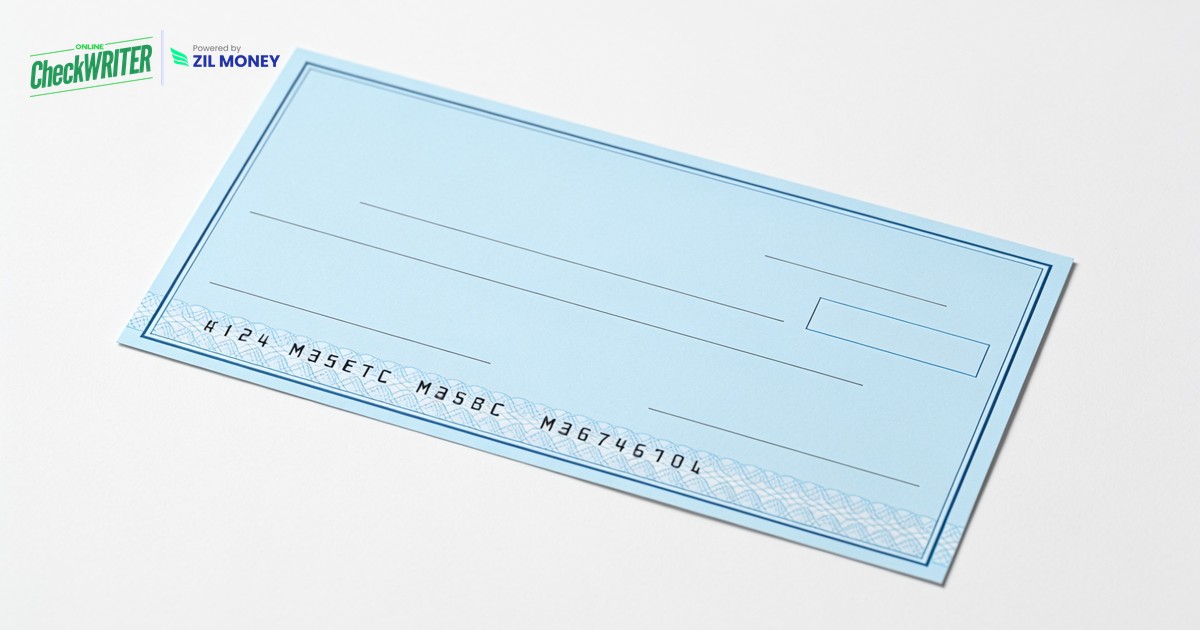
A check has a fixed set of fields, each in its place. Here is the format and layout of a check, explained part by part.
Key Takeaways
- The format and layout of a check follows a standard arrangement that banks and machines expect.
- Key fields include the date, payee line, numeric and written amounts, memo, signature, and the MICR line.
- The MICR line at the bottom carries the routing number, account number, and check number.
- Getting the layout right is what lets a check clear cleanly.
- OnlineCheckWriter.com, powered by Zil Money, positions every field for you.
The format and layout of a check looks simple, but every field sits in a specific place for a reason. Banks, scanners, and clearing systems all expect the same arrangement, and a check that strays from it can be delayed or returned. Checks still move serious money, so the details matter. U.S. payers wrote 9.2 billion checks worth 24.45 trillion dollars in 2024, according to the Federal Reserve. With OnlineCheckWriter.com, powered by Zil Money, every field lands where it belongs.
The Format and Layout of a Check: Every Part Explained
Read a check from top to bottom, and each field has a job.
- Date line (top right): The date the check is written. It also sets the clock for stale-check rules.
- Payee line (“Pay to the order of”): The name of the person or business you are paying.
- Numeric amount box: The amount in figures, inside the box next to the dollar sign.
- Written amount line (the legal amount): The amount spelled out in words. If the figures and the words disagree, the bank generally relies on the written amount.
- Memo line (bottom left): A note for what the check is for, such as an invoice number.
- Signature line (bottom right): The signature that authorizes the payment.
- Bank name and check number: The issuing bank appears on the check, and the check number sits at the top right and again in the MICR line.
- MICR line (bottom): The band of magnetic characters that encodes the routing number, account number, and check number, so machines can read and clear the check.
“Every field on a check has a place, and the MICR line is what lets a machine read it.”
How OnlineCheckWriter.com Formats Every Check Correctly
Each point below maps to a field above, not to a feature list.
- Correct placement, every time: The software positions the date, payee, both amounts, memo, and signature area to match the standard layout.
- A clean MICR line: It prints the routing, account, and check numbers in the E-13B font that banks read. A laser printer with MICR toner reads best.
- Print on blank stock: You print checks on plain blank check stock, so there is nothing to pre-order.
- Consistent design: Change your address or logo once in the check printing software, and every check follows the same layout.
- Add controls: Positive Pay matches issued checks against what clears the bank, which helps catch an altered check.
Print Checks With the Layout Done Right
Let the software place every field and the MICR line for you, then print on blank stock or mail the check from one dashboard.
Why the Format and Layout of a Check Still Matters
The layout is not decoration. The MICR line follows the E-13B standard the American Bankers Association adopted in 1958, now governed by ANSI X9 standards. When the fields and that line are correct, a check clears without a hitch. When they are off, it can be returned.
That is why the format matters even as payments go digital. The Federal Reserve still counted 9.2 billion checks in 2024, each one relying on the same layout. OnlineCheckWriter.com keeps every field in place, prints the MICR line correctly, and lets you mail or email the check when you are done. Sign up today to see how it works.
Frequently Asked Questions
What is the format and layout of a check?
What is the MICR line on a check?
What happens if the numeric and written amounts differ?
Can I design my own check layout?
Do I need a special printer for the MICR line?
OnlineCheckWriter.com, powered by Zil Money, is a financial technology company and not a bank. Banking services are provided by our partner bank, Member FDIC. FDIC insurance applies only to eligible products associated with those that have funds held in accounts at the partner bank, subject to applicable limits and requirements.